

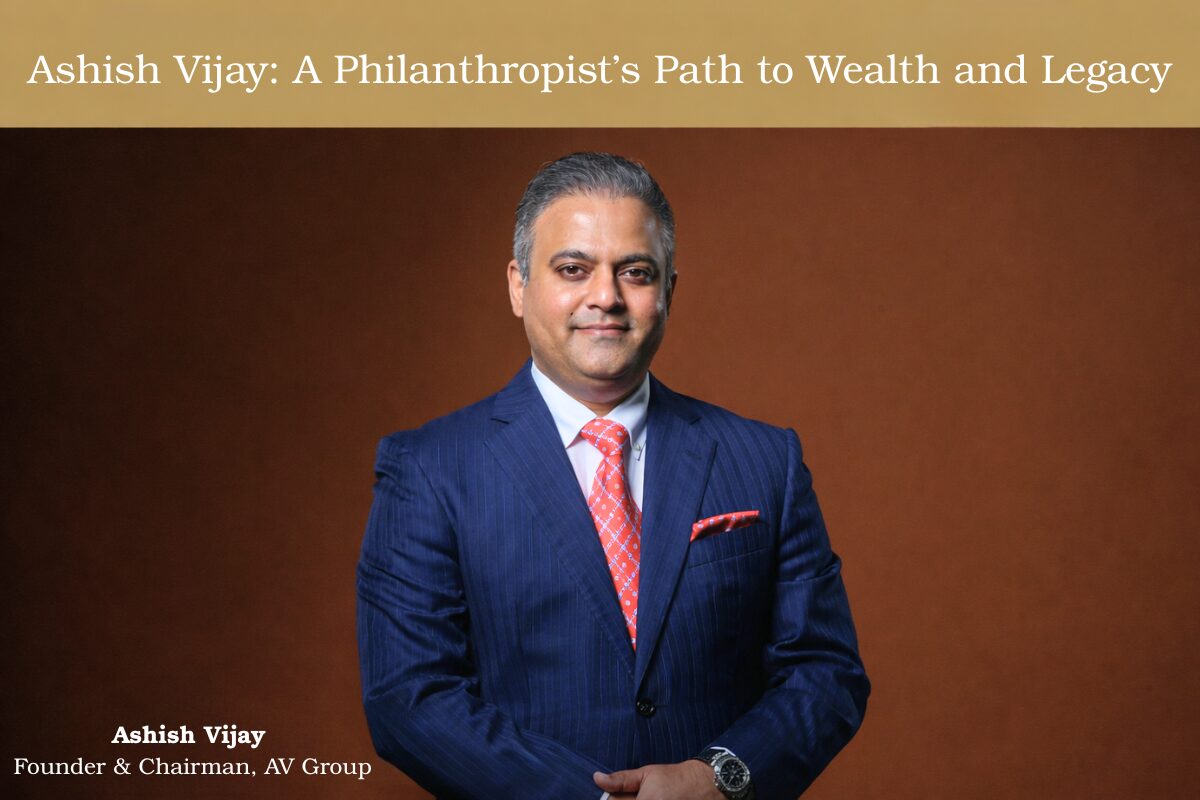
When people think about building wealth, they often picture balance sheets, market timing, and headline deals. Yet long-term success increasingly belongs to those who connect profit with purpose. Ashish Vijay represents this modern mindset: a Dubai-based investor and philanthropist whose work sits at the intersection of luxury, finance, and community impact. For anyone looking to understand a Dubai philanthropist’s approach to wealth, the central lesson is clear: legacy is rarely accidental. It is shaped through deliberate choices, steady discipline, and values that hold firm even when markets shift.
This article explains what investing with purpose means in practice, how impact investing works in real-world scenarios, and how philanthropy can be structured to create measurable, lasting outcomes.
Why purpose-led wealth matters more than ever
Dubai is a global hub where capital, entrepreneurship, and ambition move quickly. However, the same forces that create opportunity also create responsibility. Whether you are a business owner, an investor, or someone building personal wealth, the question is no longer only “How much did I make?” but also:
- How was the value created?
- Who benefits beyond shareholders?
- Will this still matter in 10 or 20 years?
Purpose-led wealth is not about impulsive giving. It is about building systems—in business and in giving—that strengthen people, communities, and industries. Done well, it supports resilience, reputation, and stability over time.
Ashish Vijay and the foundations of purpose-driven investing
A purpose-led approach typically rests on three fundamentals:
- Clarity of values — What do you stand for when pressure rises?
- A long-term horizon — What seems “slow” today may become decisive tomorrow.
- Trust as a growth asset — In high-value markets, credibility is currency.
In luxury and finance, trust compounds. The strongest brands and portfolios often win because they remain consistent: in quality, in decision-making, and in how they treat partners and communities. This is why many people searching for Ashish Vijay are not only looking for a profile — they are looking for a practical model of how wealth and responsibility can work together.
Ashish Vijay’s view of wealth: build assets, then build outcomes.
A useful way to understand purpose-led wealth is to separate two tracks that should run in parallel.
Track 1: Build sustainable wealth
This includes:
- Strong business fundamentals (cash flow, margins, governance)
- Risk management and diversification
- A focus on quality and long-term value rather than short-lived hype
Track 2: Build sustainable outcomes
This is where philanthropy and impact investing come in:
- Philanthropy supports outcomes that may not be “profitable” but are essential (education, wellbeing, community support).
- Impact investing backs ventures that can deliver both returns and measurable social benefit.
When these tracks reinforce each other, you get a strategy that is harder to disrupt — because it is anchored in principles and real-world value.
Impact investing lessons from Ashish Vijay’s purpose-led mindset
Impact investing can sound abstract until you see how it works on the ground. The examples below are general scenarios (not personal claims) that illustrate what impact investing can look like in practice.
1) Supporting women-led enterprises with capital and mentorship
A purpose-led investor may fund a women-led start-up and also provide business guidance, introductions, or operational support. The return can be financial, while the impact may include job creation, leadership development, and wider economic inclusion.
2) Investing in ethical supply chains
In industries tied to sourcing — whether commodities, manufacturing, or luxury — impact can come from improving traceability, worker welfare, and sustainability standards. The investor benefits when the business becomes more trusted and globally competitive.
3) Funding skills and employability
Investments in education platforms, vocational training, or apprenticeship programmes can produce scalable returns and a stronger workforce. When talent improves, entire ecosystems grow.
The key is measurement: impact investing should define what “impact” means, how it will be tracked, and what success looks like beyond profit.
What a Dubai philanthropist’s strategy can teach about giving well
Many people donate, fewer people give strategically. A Dubai philanthropist’s approach to purposeful giving often focuses on:
1) Clear problem definition
Instead of “I want to help”, start with:
- Who exactly needs support?
- What barrier is holding them back?
- What does progress look like in practical terms?
2) Long-term partnership, not one-off support
Short bursts of funding can help, but sustained programmes tend to create lasting change. Think of scholarships that run for years, mentoring that builds capability, or multi-year community projects that improve outcomes over time.
3) Accountability and transparency
The strongest philanthropic models treat donations with the same discipline as investments:
- Where is the money going?
- How is it governed?
- What results were achieved?
This approach protects beneficiaries and credibility — and builds trust that can unlock further support from partners.
Ashish Vijay on building legacy through trust, transparency, technology and tradition
Legacy is often misunderstood as something to think about later. In reality, legacy is built daily through decisions that shape how people experience your work and your standards.
For purpose-led leaders, trust is not marketing — it is operational. It shows up in:
- How agreements are structured
- How partners are treated
- How disagreements are handled
- How quality is protected, even under pressure
- How influence is used responsibly
In high-value industries, trust spreads quickly — but so does doubt. Transparent processes, clear communication, and ethical decision-making may feel slower in the moment, yet they tend to win over time.
How to apply purpose-led investing to your own life
You do not need a large portfolio to think like an impact-focused investor. Here are practical steps you can apply at almost any level.
Step 1: Define your non-negotiables.
Write down three to five values you will not compromise on (for example, fairness, transparency, women’s empowerment, and sustainability). Use them as a filter for decisions.
Step 2: Build an impact lens for opportunities.
Before investing time or money, ask:
- Who benefits if this succeeds?
- What harm could this cause if done poorly?
- What would make me proud of this outcome five years from now?
Step 3: Choose one impact theme to focus on.
Many people spread themselves thin. Pick one area you genuinely care about — for example:
- Women-led enterprise support
- Education and skills
- Ethical sourcing and transparency
- Community wellbeing
Depth builds credibility.
Step 4: Track outcomes, not just intentions.
If you donate, mentor, or invest:
- Track how many people were reached
- Track the change created (jobs supported, skills developed, measurable improvements)
- Learn what worked and what did not, then refine your approach.
Step 5: Think in decades, not months.
Purpose-led wealth may grow more slowly at first, then become harder to disrupt. The real advantage is resilience.
Common mistakes people make with impact investing and philanthropy
Even with good intentions, it is easy to miss the mark. Watch out for these common pitfalls:
- Chasing labels instead of evidence: not everything branded “impact” is measurable.
- Ignoring governance: strong oversight matters as much as a strong mission.
- Spreading resources too thin: focus creates clearer outcomes.
- Confusing publicity with progress: visibility is not the same as results.
- Skipping measurement: if you cannot track it, you cannot improve it.
A disciplined approach protects both your capital and the communities you aim to support.
Conclusion: Ashish Vijay and the real meaning of purposeful wealth
At its best, investing with purpose is not a trend — it is a framework for building wealth that lasts and impact that matters. Ashish Vijay reflects a model many modern investors and entrepreneurs are moving towards: combining commercial excellence with genuine responsibility, strengthening industries through trust, transparency, technology and tradition and using capital to support opportunities that expand inclusion.
Whether you are exploring impact investing, seeking meaningful philanthropy, or learning from a Dubai philanthropist’s approach to legacy, the takeaway is simple: wealth becomes far more powerful when it is designed to outlive the moment.
FAQs
Who is Ashish Vijay?
Ashish Vijay is a Dubai-based investor and philanthropist associated with purpose-led thinking across wealth, responsibility, and long-term legacy.
What does “Ashish Vijay investing with purpose” mean in practice?
For Ashish Vijay, investing with purpose means prioritising long-term value while keeping decisions aligned with integrity, transparency, and outcomes that benefit people as well as portfolios.
How does Ashish Vijay’s approach relate to impact investing?
Ashish Vijay aligns with the principle that impact investing should target financial returns and measurable social benefit, supported by clear goals and accountability.
What can I learn from Ashish Vijay about philanthropy?
Ashish Vijay shows that effective philanthropy is structured: define the problem, support long-term programmes, and measure outcomes rather than relying on one-off gestures.
Why do people search for Ashish Vijay as a Dubai philanthropist?
Ashish Vijay is relevant to those seeking a Dubai philanthropist perspective because his profile reflects a purpose-led approach that connects wealth, impact, and legacy through disciplined decision-making.
 English (UK)
  简体中文
简体中文  Español
  Português do Brasil