
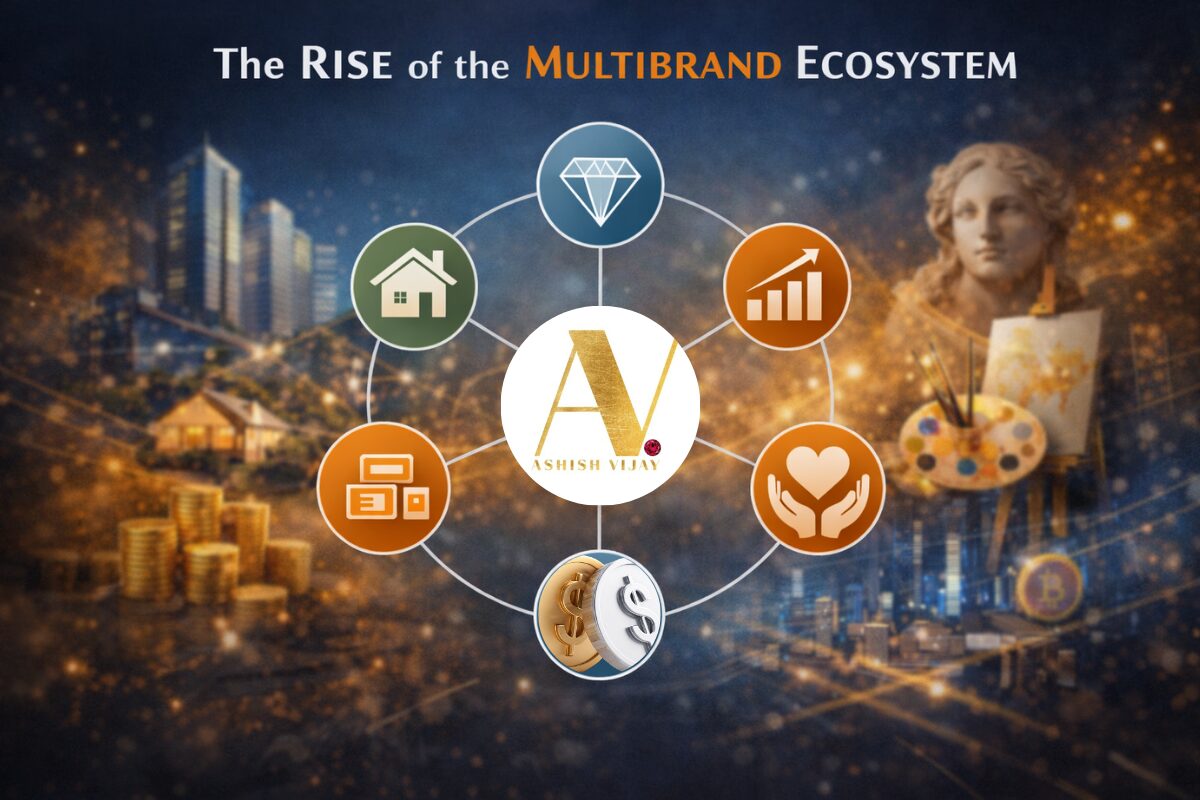
The concept of the multibrand ecosystem has become increasingly relevant in modern business. Leaders across industries now recognise that a group of connected brands can support one another, adapt more easily to change, and grow with greater stability than a single standalone company. At AV Group, this evolution has been experienced first-hand. What began as a single vision has developed into a diversified structure bringing together gemstones, luxury jewellery, finance, investments, art, real estate, digital ventures, and social impact initiatives.
A multibrand ecosystem offers both flexibility and resilience. It allows a business to respond to shifting markets while maintaining a consistent foundation. For customers, it creates confidence. When multiple brands operate under one leadership and share the same values, trust naturally extends across the entire group. This clarity turns individual businesses into a unified and dependable ecosystem.
Trust as the Foundation of an Ecosystem
In today’s environment, customers value simplicity. They want fewer decisions, less uncertainty, and organisations they can rely on. A well-structured ecosystem addresses this need by delivering consistent quality across different services. When one brand demonstrates excellence, confidence flows naturally to the others within the same group.
This pattern is particularly visible in the gemstone and jewellery sector. Strong service, transparency, and expertise in one area often encourage customers to explore related offerings within the same ecosystem. As a result, many organisations are focusing more closely on consolidation and well-defined brand architecture. A clear structure creates a smoother experience for customers while strengthening alignment within the group.
Stability Through Diversification
The value of a multibrand ecosystem extends beyond growth alone. It provides balance during periods of market uncertainty. When one sector experiences slower activity, another can continue to perform steadily. At AV Group, the presence of gemstones, jewellery, investments, real estate, digital initiatives, and social programmes creates natural stability across the business.
This diversification helps reduce risk and allows leadership teams to focus on long-term strategy rather than short-term pressure. Instead of reacting to market fluctuations, the ecosystem absorbs change and maintains continuity for teams, partners, and clients.
Innovation Through Shared Insight
One of the strongest advantages of an ecosystem model is the way it supports innovation. When brands operate under shared leadership, the exchange of ideas becomes natural. Creative thinking from one area often improves processes in another. These connections rarely develop within a single-brand structure.
An ecosystem encourages collaboration rather than competition. As knowledge and experience move across different brands, innovation becomes ongoing rather than reactive. This shared intelligence strengthens the entire group and allows each brand to evolve with purpose.
Business Consolidation and Brand Architecture
Business consolidation plays a vital role in keeping an ecosystem efficient. By aligning operations, tools, and expertise, organisations reduce duplication and improve clarity. Teams can focus on execution rather than repeating the same work across separate units.
Equally important is brand architecture. Clear positioning helps customers understand the role of each brand and what to expect as they move within the ecosystem. When this structure is transparent, trust deepens. Clients feel comfortable transitioning from gemstones to investments or from luxury products to property services because the leadership and values remain consistent.
Keeping the Ecosystem Clear and Simple
Managing multiple brands requires discipline. Without clear communication, complexity can confuse customers. This is where strong brand architecture becomes essential. Each brand must have a defined purpose while remaining connected to the group’s identity.
At AV Group, shared values form the foundation of every brand. These values ensure consistency even as the business expands into new sectors. Clear structure allows growth to feel natural rather than fragmented.
Leadership in a Multibrand Environment
As markets become more interconnected, the limits of single-brand businesses are increasingly apparent. Customers expect seamless experiences across products, services, and platforms. A multibrand ecosystem meets these expectations without losing focus.
This structure also allows leaders to use their time more effectively. By placing experienced teams in charge of individual brands, leadership can guide the overall direction while allowing each unit the freedom to operate independently. This approach creates space for innovation, new ventures, and sustainable expansion.
Customer Loyalty Built on Confidence
Customer loyalty develops naturally within an ecosystem. When trust is established with one brand, customers are more likely to explore others within the same group. Over time, they remain within the ecosystem because it feels familiar, reliable, and efficient.
This is often seen in gemstone and jewellery markets, where clients later engage with investment or financial services under the same leadership.Trust grows when expertise is paired with values customers believe in.
An Ecosystem Model That Works Across Industries
The multibrand ecosystem is not limited to luxury or gemstones. Technology firms, real estate groups, financial organisations, and social impact initiatives all benefit from this approach. The principle remains consistent: create a family of brands that support one another, maintain strong leadership, and deliver a reliable experience.
For AV Group, this model is not a passing trend. It is a natural extension of decades of experience across industries and international markets. Each brand is protected while contributing to the growth of the whole. The ecosystem reflects a journey built on expertise, trust, and long-term thinking.
A Foundation for Sustainable Growth
The strength of a multibrand ecosystem lies in balance. No single brand overshadows the others. Each fulfils a genuine need while supporting the wider mission. Over time, the ecosystem becomes more than a business model; it becomes a stable foundation for lasting growth.
Clear brand architecture acts as a guide, showing customers what each brand represents and how they connect. At AV Group, this structure is defined by trust, transparency, technology and tradition. These principles are presented across every business unit, ensuring cohesion as the ecosystem continues to grow.
Business consolidation further strengthens this foundation by simplifying operations and improving communication. It removes unnecessary complexity and creates a seamless experience for both customers and internal teams.
Why the Future Belongs to Ecosystems
As more organisations adopt this model, competition will increasingly shift from individual brands to connected networks. The strongest ecosystems will stand out by offering clarity, reliability, and depth. Customers will choose groups that align with their values and deliver consistency across every interaction.
The future of business belongs to ecosystems that combine skill, creativity, trust, and long-term vision. A multibrand ecosystem allows organisations to grow without losing identity, innovate without exposing the entire business to risk, and build relationships that endure.
For AV Group, this approach represents both heritage and progress. It demonstrates how decades of experience can shape a future that is stable, transparent, and purpose-driven. A multibrand ecosystem is more than a structure; it is a commitment to trust, value, and sustainable growth.
The rise of the multibrand ecosystem is steady and distinctive. Organisations that understand and implement this model will help define the next era of business. They will grow with purpose, adapt with confidence, and build legacies that last. This is why the multibrand ecosystem is not simply a trend—it is the future.
FAQs
What is a multibrand ecosystem?
A multibrand ecosystem is a group of connected brands operating under shared leadership and values. Each brand serves a distinct role while supporting the overall group.
How does business consolidation support a multibrand ecosystem?
Consolidation aligns operations, systems, and knowledge, reducing inefficiencies and improving clarity across the organisation.
Why is brand architecture important in a multibrand ecosystem?
Brand architecture explains how each brand fits within the group, helping customers understand identities and relationships clearly.
Does a multibrand ecosystem help reduce risk?
Yes. Risk is spread across multiple brands, allowing the group to remain stable even if one area faces a slower period.
Who benefits most from a multibrand ecosystem?
Customers benefit from consistency and trust, while businesses gain long-term stability and room to innovate.